


what IS that thing?


Thread Starter
Registered User
Joined: Apr 2012
Posts: 104
what IS that thing?
So, i replaced my exhaust manifold with headers, and when i took it apart, there i a hose that slid off of something (if it was ever installed correctly) that was attached to the bottom of my intake manifold. it is forward of the EGR tube, about halfway to the fron of the manifold, but still goes downward. it ends in a near "L" shape metal tube. it was filled with old nasty oil.
what is that and where does the other end go?
also- while i have you here, is it possible to cut the egr tube and splice it with any type of high temperature hose? the new headers are slightly off, and we cant get it back onto the egr valve. (plugging it is NOT an option, as i will have to do an emissions test soon) thanks for all the help!
what is that and where does the other end go?
also- while i have you here, is it possible to cut the egr tube and splice it with any type of high temperature hose? the new headers are slightly off, and we cant get it back onto the egr valve. (plugging it is NOT an option, as i will have to do an emissions test soon) thanks for all the help!

The Good Twin
Joined: Aug 2005
Posts: 20,639
From: Wild Wild West, UTAH!
#1... PCV valve, Check out your Haynes manual / FSM. 
#2... You're talking about the metal connector tube that runs from the bottom of the intake EGR port to the exhaust manifold? It's metal... just "tweak" it (bend it) till it matches up.
#2... You're talking about the metal connector tube that runs from the bottom of the intake EGR port to the exhaust manifold? It's metal... just "tweak" it (bend it) till it matches up.

Mr Z++ Wiki
Joined: Sep 2009
Posts: 2,195
From: Victoria, BC
So, i replaced my exhaust manifold with headers, and when i took it apart, there i a hose that slid off of something (if it was ever installed correctly) that was attached to the bottom of my intake manifold. it is forward of the EGR tube, about halfway to the fron of the manifold, but still goes downward. it ends in a near "L" shape metal tube. it was filled with old nasty oil.
what is that and where does the other end go?
also- while i have you here, is it possible to cut the egr tube and splice it with any type of high temperature hose? the new headers are slightly off, and we cant get it back onto the egr valve. (plugging it is NOT an option, as i will have to do an emissions test soon) thanks for all the help!
what is that and where does the other end go?
also- while i have you here, is it possible to cut the egr tube and splice it with any type of high temperature hose? the new headers are slightly off, and we cant get it back onto the egr valve. (plugging it is NOT an option, as i will have to do an emissions test soon) thanks for all the help!
Thread Starter
Registered User
Joined: Apr 2012
Posts: 104
check. will not replace metal line with hose. tweaking that tube though is hard. i found out that i actually DONT have to do an emissions test... does the egr valve have to be installed for the engine to run? i know on some cars, plugging it changes the car's air/fuel ratio and makes it run poorly.
also, i put synthetic oil in the car and it ran great for about a week, but now its clicking when it warms up. a guy at the auto shop told me that the lifters cant use synthetic because it is too thin and that i should go back to conventional oil. has anyone got experience with this?
Thanks for the help guys, for some reaspn, the pcv valve was not in the FSM. (can i plug this as well?)
also, i put synthetic oil in the car and it ran great for about a week, but now its clicking when it warms up. a guy at the auto shop told me that the lifters cant use synthetic because it is too thin and that i should go back to conventional oil. has anyone got experience with this?
Thanks for the help guys, for some reaspn, the pcv valve was not in the FSM. (can i plug this as well?)
The Good Twin
Joined: Aug 2005
Posts: 20,639
From: Wild Wild West, UTAH!
The egr valve defaults to closed, so as long as you can verify that the valve functions correctly (opens under vacuum), then just leave it on the intake. Or fab up a block off plate.
Synthetic oil is fine with lifters... the reason the lifters are now making noise is because conventional oil is molecularly thicker, so you now need to re-adjust your valve lash clearance because they've probably been out of spec for a long time.
The PCV valve is in the Haynes... no you shouldn't plug it.
Synthetic oil is fine with lifters... the reason the lifters are now making noise is because conventional oil is molecularly thicker, so you now need to re-adjust your valve lash clearance because they've probably been out of spec for a long time.
The PCV valve is in the Haynes... no you shouldn't plug it.
Registered User
Joined: Jul 2011
Posts: 548
From: Foresthill, California
check. will not replace metal line with hose. tweaking that tube though is hard. i found out that i actually DONT have to do an emissions test... does the egr valve have to be installed for the engine to run? i know on some cars, plugging it changes the car's air/fuel ratio and makes it run poorly.
also, i put synthetic oil in the car and it ran great for about a week, but now its clicking when it warms up. a guy at the auto shop told me that the lifters cant use synthetic because it is too thin and that i should go back to conventional oil. has anyone got experience with this?
Thanks for the help guys, for some reaspn, the pcv valve was not in the FSM. (can i plug this as well?)
also, i put synthetic oil in the car and it ran great for about a week, but now its clicking when it warms up. a guy at the auto shop told me that the lifters cant use synthetic because it is too thin and that i should go back to conventional oil. has anyone got experience with this?
Thanks for the help guys, for some reaspn, the pcv valve was not in the FSM. (can i plug this as well?)
)The argument I've always heard for synthetic is that it is typically better to use, however not in higher mileage engines that have only been running on conventional oil. The conventional oil gunk has built up around gaskets and other places in the engine and when you put in synthetic, the detergents in the synthetic oil break that down. That potentially causes leaks and a whole mess of other issues.
Mr Z++ Wiki
Joined: Sep 2009
Posts: 2,195
From: Victoria, BC
I've been using synthetic but my engine was rebuilt and has been running on synthetic since then. (And I sure hope I'm not making a mistake )
The argument I've always heard for synthetic is that it is typically better to use, however not in higher mileage engines that have only been running on conventional oil. The conventional oil gunk has built up around gaskets and other places in the engine and when you put in synthetic, the detergents in the synthetic oil break that down. That potentially causes leaks and a whole mess of other issues.
)The argument I've always heard for synthetic is that it is typically better to use, however not in higher mileage engines that have only been running on conventional oil. The conventional oil gunk has built up around gaskets and other places in the engine and when you put in synthetic, the detergents in the synthetic oil break that down. That potentially causes leaks and a whole mess of other issues.
Ah yes the great oil debate. Convetional oil today is a lot different than convetional oil from twenty years ago. They have way better detergent packages, etc so you won't typically see sludge, etc building up in your engine.
Here's how synthetic is different than Dinosaur oil. With dino oil you get a blend of molecules to make a certain viscosity. Some are say eight lengths long, some twelve and some sixteen (just making up lengths for illustration purposes). Synthetic on the other hand are all twelve. So the twelve length chains will slip past the seals on your car and so will the eights. The dino oil has sixteens that are too big to slip past the seals so they keep the eights and twelves from leaking past. The synthetic is all twelves so it can seep past.
That being said if you are leaking oil around the seals when you change to synthetic it's because your seals are worn and need to be replaced not because synthetic isn't good to use on an older car.
Synthetic is a better product because it is more consistant and it's properties are more predictable. It tends to be more resistant to heat damage which is why it's important to use in a turbo engine. I use it in all my cars. I like the Penzzoil Platinum because the price is decent and it has very good VOA results from independent labratories. If you really want to research oil bobistheoilguy.com is a great resource.
Common engine folklore is to use dino oil to break in your engine because it lets the rings seat in better than the too slippery synthetic. I haven't researched to verify the validity of this but it seems to make sense and I would probably follow that logic.
While I'm blabing on about oil another important thing most people don't realize (generally speaking of course) is that oil flow is more important than oil pressure. You need flow to get the oil to where it needs to be. That's why it's important to use the manufactures specified weights. For example most of us would use 10W30 or with a synthetic 5W30. The lower you can get the first number the better because that is the viscosity of the oil when it's cold and you want the oil to get to the top of the motor ASAP when you start the vehicle. The second number is the viscosity when the oil is up to temp.
Thread Starter
Registered User
Joined: Apr 2012
Posts: 104
valve lash clearance... from what i can see, that looks like something i might want to take it in for... will driving it the way it is hurt it? because we were looking at getting a performance cam anyway, but it will be a couple months before we can afford that.
also, when you say leave the egr valve on the intake, are you telling me to hook it up? or do you mean that it doesnt matter if it is plugged since it only opens under vacuum? obviously i would plug the hole in the exhaust where that hooks up.
also, when you say leave the egr valve on the intake, are you telling me to hook it up? or do you mean that it doesnt matter if it is plugged since it only opens under vacuum? obviously i would plug the hole in the exhaust where that hooks up.
Last edited by ZZzzz; May 14, 2012 at 05:31 PM.
The Good Twin
Joined: Aug 2005
Posts: 20,639
From: Wild Wild West, UTAH!
Just had a discussion on adjusting the valves ( https://www.zdriver.com/forums/280zx...jusment-35135/ )
It's not fun the first time, but afterwards, you'll be a pro.
It's not fun the first time, but afterwards, you'll be a pro.

Big Poppa
Joined: Jan 2005
Posts: 4,499
From: Mission, British Columbia
the thing about oil pressure and volume are is that volume is the amount of oil going to a said area whereas the the pressure gets it to the furthest points of the engine. that said its a balance and you can have great volume to the crank and none to the cam or not much oil everywhere if you have bad parts
Thread Starter
Registered User
Joined: Apr 2012
Posts: 104
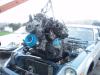
ok, so now the headers are installed, the pcv valve is reinstalled correctly, (with a new hose, because the old one was absolutely done in) and the only thing (i think) different is that there are headers instead of a manifold and the egr valve is still open to the world.
the car will start and run so long as i keep it above 1k rpm, but when i let off the gas it just winds down and dies. no choking or sputtering, it just gently goes to sleep. there is a fairly strong odor of unburned gasoline as well.
the headers and the intake were installed nice and tight with an impact gun and a new gasket. there may be some invisible holes in a vacuum line, particularly those ones under/around the dizzy, or there may be something i forgot to install (although i doubt it, it all looks like it is installed the way i think it looks in all the pics i have found)
the exact position that the egr tube is in now is: attached at the header end, and dangling at the intake end. neither the dangling tube nor the egr port are plugged. i do not believe we can "tweak" that tube any more because we started a very small crack by doing so.
i pinched off the small vacuum line that leads off the top of the egr valve and tried to idle, but no change. could the egr valve in its current state be the cause of the car not idling? or should i look elsewhere?
On the plus side, with straight pipes and these msa 3-2 ceramic coated headers, the car sounds super intimidating! just waiting on the new MSA exhaust to arrive. (the old tailpipe was crushed this whole time where it arches up and over the rear axle) it had about 2-3 cm by 8-9 cm ovalish worth of exhaust flow back there.
the car will start and run so long as i keep it above 1k rpm, but when i let off the gas it just winds down and dies. no choking or sputtering, it just gently goes to sleep. there is a fairly strong odor of unburned gasoline as well.
the headers and the intake were installed nice and tight with an impact gun and a new gasket. there may be some invisible holes in a vacuum line, particularly those ones under/around the dizzy, or there may be something i forgot to install (although i doubt it, it all looks like it is installed the way i think it looks in all the pics i have found)
the exact position that the egr tube is in now is: attached at the header end, and dangling at the intake end. neither the dangling tube nor the egr port are plugged. i do not believe we can "tweak" that tube any more because we started a very small crack by doing so.
i pinched off the small vacuum line that leads off the top of the egr valve and tried to idle, but no change. could the egr valve in its current state be the cause of the car not idling? or should i look elsewhere?
On the plus side, with straight pipes and these msa 3-2 ceramic coated headers, the car sounds super intimidating! just waiting on the new MSA exhaust to arrive. (the old tailpipe was crushed this whole time where it arches up and over the rear axle) it had about 2-3 cm by 8-9 cm ovalish worth of exhaust flow back there.
Mr Z++ Wiki
Joined: Sep 2009
Posts: 2,195
From: Victoria, BC
the thing about oil pressure and volume are is that volume is the amount of oil going to a said area whereas the the pressure gets it to the furthest points of the engine. that said its a balance and you can have great volume to the crank and none to the cam or not much oil everywhere if you have bad parts
Thread Starter
Registered User
Joined: Apr 2012
Posts: 104
problem solved. it was a bad gasket received from MSA with their headers. 16 bucks and 2 hours fixed the problem. car runs well, but it is loud as hell. still waiting on the muffler/catback pipes before i can drive it home and get that valve lash done.

Thread
Thread Starter
Forum
Replies
Last Post
Bookmarks


