


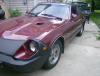
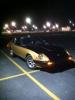
1982 280zx starting issuse


Thread Starter
Registered User
Joined: May 2014
Posts: 2
From: Sherwood Park
1982 280zx starting issuse
hey there i am new to the whole datsun seen i just picked up this datsun and it wont start and it will cranks but the sensor light will come on and the fuel light stays on even thought i have a full tank of gas i need someones help please.!!!!!!!!

The Good Twin
Joined: Aug 2005
Posts: 20,639
From: Wild Wild West, UTAH!
Welcome to ZDriver!
An engine needs 3 things to start:
-Fuel
-Spark
-Compression
Check these things at each cylinder and report back.
Also make sure you download the FSM for free (see my Welcome PM): XenonS130 - S130 Reference
An engine needs 3 things to start:
-Fuel
-Spark
-Compression
Check these things at each cylinder and report back.
Also make sure you download the FSM for free (see my Welcome PM): XenonS130 - S130 Reference


The Good Twin
Joined: Aug 2005
Posts: 20,639
From: Wild Wild West, UTAH!
 I suggest checking the CHTS and connector.

The Evil Twin
Joined: Mar 2001
Posts: 9,297
From: Seattle, WA
You may need to replace those spark plugs or at least remove them and wipe them down with a cloth. Many spark plugs I had found would not function after being flooded with fuel for too long. (in a Z)
The Evil Twin
Joined: Mar 2001
Posts: 9,297
From: Seattle, WA
I've also had spark plugs that I took out and saw were sparking. It didn't fire up until I replaced the spark plugs again.
You may be right, but just keep in mind that visually seeing spark is not a guarantee the spark plugs are not partially to blame.
You may be right, but just keep in mind that visually seeing spark is not a guarantee the spark plugs are not partially to blame.

Registered User
Joined: Apr 2014
Posts: 42
Ok, try this...You said it will start, then it seems like if floods itself...I presume you're doing all of this by yourself???? But disconnect the linkage to the fuel rails....That way you will not be able to pump the foot feed..(gas pedal)....You would be then starting on idle fuel pressure....Now if it's starting and flooding out, I'd be thinking fuel pressure problem....
Any vehicle with a electric fuel pump is capable of putting out boo coo pressure and volume. But the engine..be it carb or fuel injection will only take what it needs. If there is no means to stop that pressure/volume, then it is going to keep pumping full bore. Yep, it will flood.
If it was a carb, then the float would rise and shut off the amount of gas going into the fuel bowl....If the float sticks, then it'll flood. Ok, since this isn't a carb engine, The fuel injectors has sort of the same set up. A orifice to restrict or open as the need for gas arises....
Now to tell you the truth, I'm going to let one of these other fine gentlemen here on the forum let you know for sure where that's located...(I don't feel like looking it up, sorry about that)
But it seems you've eliminated the problem of Spark. Compression, I wouldn't worry about. Gas you're getting to the injectors, just too much of it, correct?
As far as sensor lights go, are you talking about the center red light? The fuel light won't go out until the car is running...Sort of like the the door light won't go out until the doors are completely closed, and the door switch is closed.
With the key turned to the on. the door light will be on if a door is open, and the fuel light will be on until it's running....When you are turning the car over with the key, does the fuel light go out, or stay on, even though it does not run?
Old Codger
Any vehicle with a electric fuel pump is capable of putting out boo coo pressure and volume. But the engine..be it carb or fuel injection will only take what it needs. If there is no means to stop that pressure/volume, then it is going to keep pumping full bore. Yep, it will flood.
If it was a carb, then the float would rise and shut off the amount of gas going into the fuel bowl....If the float sticks, then it'll flood. Ok, since this isn't a carb engine, The fuel injectors has sort of the same set up. A orifice to restrict or open as the need for gas arises....
Now to tell you the truth, I'm going to let one of these other fine gentlemen here on the forum let you know for sure where that's located...(I don't feel like looking it up, sorry about that)
But it seems you've eliminated the problem of Spark. Compression, I wouldn't worry about. Gas you're getting to the injectors, just too much of it, correct?
As far as sensor lights go, are you talking about the center red light? The fuel light won't go out until the car is running...Sort of like the the door light won't go out until the doors are completely closed, and the door switch is closed.
With the key turned to the on. the door light will be on if a door is open, and the fuel light will be on until it's running....When you are turning the car over with the key, does the fuel light go out, or stay on, even though it does not run?
Old Codger

Grumpy & Helpful
Joined: Sep 2006
Posts: 1,415
From: Mill Creek WA
if you would really like answers that would help you and avoid flames give the following info when you post: year of car, n/a or turbo engine, stick or slushbox. Most of us can tell by the year what model you have ie 85T is a turbo z31. Z cars come in many flavors and they are all different. example 84,85,86 Z31's pretty comparable. there were changes in 87,88,89. in addition 300ZX can refer to two completly different cars the Z31 and the Z32. No mindreaders here the more info you can post the more likely you get a cogent useful answer. The cars with L engine (straight six) changed almost yearly from their introduction. A 240Z and and a 280Z have similarities but they can also have wide variance.
there are differences in the FI setup between the turbo and n/a models so need to know that.
Put a pressure gage between the filter and the fuel ring so you know what you got. Data is a bigger help than "I hear the pump running". If your fpr is toast you can be getting too much fuel because the pressure on the ring is way high. read up to fuel injector bible on atlantic z car. written for the older cars but still valid principals for the s130. You have to understand how the system works to be able to correctly trouble shoot problems. at the moment you are just shooting at things in a dark room. there really is nothing analogous to the carb float on an FI engine except perhaps the fpr but that is a real stretch. Also keep in mind that vacuum leaks are the bane of the FI engine. Your Air flow meter may be way out of adjustment particularly if some brain dead PO figured on making it run better by adjusting it.
There is no linkage to the fuel rails. Again you must understand how the system is designed to operate to effectively repair it. I think Old Codger (of which I am one being born before WWII) is thinking too far in the past.
pressure gage and fittings to check fuel pressure is cheap (get 6 dollar oil pressue gage at auto parts store plus fittings from hardware to make things up). VAccuum gage is cheap and only need a piece of hose to hookup.
there are differences in the FI setup between the turbo and n/a models so need to know that.
Put a pressure gage between the filter and the fuel ring so you know what you got. Data is a bigger help than "I hear the pump running". If your fpr is toast you can be getting too much fuel because the pressure on the ring is way high. read up to fuel injector bible on atlantic z car. written for the older cars but still valid principals for the s130. You have to understand how the system works to be able to correctly trouble shoot problems. at the moment you are just shooting at things in a dark room. there really is nothing analogous to the carb float on an FI engine except perhaps the fpr but that is a real stretch. Also keep in mind that vacuum leaks are the bane of the FI engine. Your Air flow meter may be way out of adjustment particularly if some brain dead PO figured on making it run better by adjusting it.
There is no linkage to the fuel rails. Again you must understand how the system is designed to operate to effectively repair it. I think Old Codger (of which I am one being born before WWII) is thinking too far in the past.
pressure gage and fittings to check fuel pressure is cheap (get 6 dollar oil pressue gage at auto parts store plus fittings from hardware to make things up). VAccuum gage is cheap and only need a piece of hose to hookup.
Last edited by rogerz; Aug 2, 2014 at 03:08 PM.
Grumpy & Helpful
Joined: Sep 2006
Posts: 1,415
From: Mill Creek WA
Read this it may give some enlightenment:
Get your battery load tested. Be sure you have clean, tight corrosion free terminals on both ends of your battery cables. Be sure the ground (negative) cable goes to a bolt into the frame before going to the starter. grounding through the starter is not a reliable connection. Z's don't like low voltage. causes the electronics to act funny. it is possible to have enough amps to crank but not enough voltage to run the electronics. If you have one size fit all cheapo clamp on terminals they are a problem waiting to happen. Usually on a rainy night around Oh Dark Thirty.
Clean the connectors for the maf or afm, ecu and tps. Deoxit by CAIG is probably the best connector cleaner on the market. spray with CorrosionX after cleaning and before putting together this will help prevent any further corrosion. DON'T USE DIELECTRIC GREASE.
Replace outer tie rod ends, and ball joints. replace the bushings with poly (don't forget to lube them as directed unless you like squeaky things). New shocks. Get new boots for power steering. all those things will make you think you are driving a different car. doing them piece meal is a waste you won't see a great improvement until you do the complete job. You need to get the car realigned after messing with the front. Have your tires in good shape and rebalance. Rear bushings nice too but more work and you won't notice as great an improvement. Rear shocks also because if the fronts are gone so are the rears. if car squats when you jump on the gas the rears are gone. If you have the electro adjustable shocks they are DEFINITELY GONE.
If you are doing a turbo car shocks (electro adjust I think may be only on the turbos) then you need the adapter plates to fit modern shocks to the car. Easiest way is find an n/a at the junkyard and take the mounting plates. They may be available thru NAPA (listed) but I had the n/a plates.
When trying to start without success you can easily inject enough unburned fuel to effectively flood the engine (using old carburetor terminology). this then prevents you from starting the engine normally. If you have checked everything and still no luck try this. disconnect a wire from the fuel pump so it won't pump (on a z31 pull the fuse). you need a fully charged good battery for this. hold the gas pedal to the floor and give it a long crank. you may or may not get a few pops. Do it again. it may run for a few seconds. do it again. When you no longer get any action reactivate the fuel pump and try a normal start.
Get your battery load tested. Be sure you have clean, tight corrosion free terminals on both ends of your battery cables. Be sure the ground (negative) cable goes to a bolt into the frame before going to the starter. grounding through the starter is not a reliable connection. Z's don't like low voltage. causes the electronics to act funny. it is possible to have enough amps to crank but not enough voltage to run the electronics. If you have one size fit all cheapo clamp on terminals they are a problem waiting to happen. Usually on a rainy night around Oh Dark Thirty.
Clean the connectors for the maf or afm, ecu and tps. Deoxit by CAIG is probably the best connector cleaner on the market. spray with CorrosionX after cleaning and before putting together this will help prevent any further corrosion. DON'T USE DIELECTRIC GREASE.
Replace outer tie rod ends, and ball joints. replace the bushings with poly (don't forget to lube them as directed unless you like squeaky things). New shocks. Get new boots for power steering. all those things will make you think you are driving a different car. doing them piece meal is a waste you won't see a great improvement until you do the complete job. You need to get the car realigned after messing with the front. Have your tires in good shape and rebalance. Rear bushings nice too but more work and you won't notice as great an improvement. Rear shocks also because if the fronts are gone so are the rears. if car squats when you jump on the gas the rears are gone. If you have the electro adjustable shocks they are DEFINITELY GONE.
If you are doing a turbo car shocks (electro adjust I think may be only on the turbos) then you need the adapter plates to fit modern shocks to the car. Easiest way is find an n/a at the junkyard and take the mounting plates. They may be available thru NAPA (listed) but I had the n/a plates.
When trying to start without success you can easily inject enough unburned fuel to effectively flood the engine (using old carburetor terminology). this then prevents you from starting the engine normally. If you have checked everything and still no luck try this. disconnect a wire from the fuel pump so it won't pump (on a z31 pull the fuse). you need a fully charged good battery for this. hold the gas pedal to the floor and give it a long crank. you may or may not get a few pops. Do it again. it may run for a few seconds. do it again. When you no longer get any action reactivate the fuel pump and try a normal start.
Registered User
Joined: Apr 2014
Posts: 42
if you would really like answers that would help you and avoid flames give the following info when you post: year of car, n/a or turbo engine, stick or slushbox. Most of us can tell by the year what model you have ie 85T is a turbo z31. Z cars come in many flavors and they are all different. example 84,85,86 Z31's pretty comparable. there were changes in 87,88,89. in addition 300ZX can refer to two completly different cars the Z31 and the Z32. No mindreaders here the more info you can post the more likely you get a cogent useful answer. The cars with L engine (straight six) changed almost yearly from their introduction. A 240Z and and a 280Z have similarities but they can also have wide variance.
there are differences in the FI setup between the turbo and n/a models so need to know that.
Put a pressure gage between the filter and the fuel ring so you know what you got. Data is a bigger help than "I hear the pump running". If your fpr is toast you can be getting too much fuel because the pressure on the ring is way high. read up to fuel injector bible on atlantic z car. written for the older cars but still valid principals for the s130. You have to understand how the system works to be able to correctly trouble shoot problems. at the moment you are just shooting at things in a dark room. there really is nothing analogous to the carb float on an FI engine except perhaps the fpr but that is a real stretch. Also keep in mind that vacuum leaks are the bane of the FI engine. Your Air flow meter may be way out of adjustment particularly if some brain dead PO figured on making it run better by adjusting it.
There is no linkage to the fuel rails. Again you must understand how the system is designed to operate to effectively repair it. I think Old Codger (of which I am one being born before WWII) is thinking too far in the past. Oh Rats, you found me out!!!!!
I think we both hit upon the same thoughts, that being, possibly a fuel pressure problem...Hopefully I didn't throw him or everyone else too far, by making the comparison of of a carb, and the fuel pressure value.
pressure gage and fittings to check fuel pressure is cheap (get 6 dollar oil pressue gage at auto parts store plus fittings from hardware to make things up). VAccuum gage is cheap and only need a piece of hose to hookup.
YES, a mechanics best friend.
there are differences in the FI setup between the turbo and n/a models so need to know that.
Put a pressure gage between the filter and the fuel ring so you know what you got. Data is a bigger help than "I hear the pump running". If your fpr is toast you can be getting too much fuel because the pressure on the ring is way high. read up to fuel injector bible on atlantic z car. written for the older cars but still valid principals for the s130. You have to understand how the system works to be able to correctly trouble shoot problems. at the moment you are just shooting at things in a dark room. there really is nothing analogous to the carb float on an FI engine except perhaps the fpr but that is a real stretch. Also keep in mind that vacuum leaks are the bane of the FI engine. Your Air flow meter may be way out of adjustment particularly if some brain dead PO figured on making it run better by adjusting it.
There is no linkage to the fuel rails. Again you must understand how the system is designed to operate to effectively repair it. I think Old Codger (of which I am one being born before WWII) is thinking too far in the past. Oh Rats, you found me out!!!!!
I think we both hit upon the same thoughts, that being, possibly a fuel pressure problem...Hopefully I didn't throw him or everyone else too far, by making the comparison of of a carb, and the fuel pressure value.
pressure gage and fittings to check fuel pressure is cheap (get 6 dollar oil pressue gage at auto parts store plus fittings from hardware to make things up). VAccuum gage is cheap and only need a piece of hose to hookup.
YES, a mechanics best friend.
Old Codger

Thread
Thread Starter
Forum
Replies
Last Post
280ZXfan
280ZX (S130) Forums
5
Feb 19, 2011 10:10 PM
Nissan4Ever_626
280ZX Performance / Technical
2
May 31, 2008 08:47 PM
Bookmarks


